
CAT Camp Queer
Welcome! Introduction to some of the creative and rebellious roots of queer culture in America. And, how to calm, art, and transcend--tools for anxiety in apocalypse. (Not to be dramatic or anything.)


This is the welcome post for the writing course on Queer America. All posts for the course will appear with the above icon.
On day 1, we will be considering “Camp Rules” and defining “queer” in its radical, rebellious, anti-white supremacist sense. We are talking about a defiant queerness that was born in the AIDS crisis and theorized in the 1990s.
As we queer folk navigate the near future, which seems pretty hostile to our kind, we can learn from our elders: these LGBTQIA+ kin navigated far more dangerous times with humor, grace, art, love and collaboration.
Critique is valuable. But we must start describing what we would create in place of what we critique. Maybe if we build it they will come along.
Camp Rules
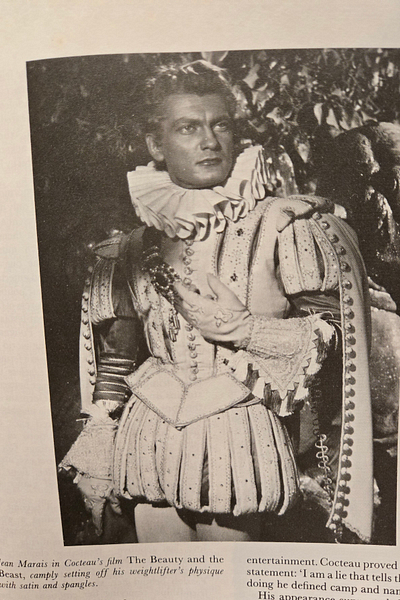
According to Philip Core, in Camp: The Lie that Tells the Truth (1984) Camp has rules:

Read more about Camp below. Discuss in the Comments.
Queer
It is about much more than being gay. Queer is a relation to the norm. In the most obvious sense, the relation can be one of opposition: if the norm is hetero, to be queer is to be gay. Or if the norm is binary, to be queer is to be nonbinary.
But we can also be in other relations. For example, it seems to me that they/them folk tend to transcend the binary, #transbinary. To transcend is a relation to the norm.
Like Camp, it is more than about same-sex desire or breaking gender norms.
Queerness is in defiance, in resistance, in ignorance, in refusal, and, sometimes, inept in relation to the norms.
If the norm is white supremacy?
If the norm is meanness, how shall We relate to that? How do we know ourselves #against meanness?
C.A.T. (Calm, Art, Transcend)
I share this episode of We Can Do Hard Things because the tools for managing anxiety suggested here align with the goals of this course.
And they are effective.
The interviewers are fellow queer people, Glennon Doyle and Abby Wambach (plus brilliant sister and feminist Amanda Doyle) and the interviewee, Martha Beck, host of The Gathering Place, is also queer.
Moreover, the idea of building community, calming ourselves in scary times, then using creativity to shift out of survival mode might help students who struggle with anxiety.
I hope that all of the assignments for this course on the history of Queer America ignite creativity. One of my goals is to help you get out of fear and into community and visioning.
Critique is valuable. But we must start describing what we would create in place of what we critique. Maybe if we build it they will come along.
My Camp Rule is: "CAMP is first of all a second childhood". I believe this means that discovering an identity for oneself is tantamount to experiencing a second childhood. Breaking free from the norms of society and developing an identity original to you alone can resemble the first childhood that was used to explore the world and one's role within it at a younger impressionable age.
The prompt I wrote about was “Camp is anti-art in the same way physical desire is anti-creative”. I interpreted this as physical desire is something that inherently everyone feels and to not feel it is to be outside the norm, to not be creative. It can be creative if looked at in a different light or angle but it is anti-creative at face value. Camp can be viewed in the same way. At face value, it is not seen as art and even anti-art but art is something that has a norm that is perceived and camp is its own form of art that is outside the norm. I do not have much experience with the art of camp and I have conflicted feelings about physical desire so this prompt was challenging but it still spoke to me like a puzzle wanting to be solved. Both physical desire and camp are confusing categories that span a multitude of options. They can mean different things depending on many factors and can be misconstrued easily. This does not mean they are impossible to decipher, it just means it takes longer to get to the end goal and often the product is worth the effort.